

Union Budget: Laying the foundations for long-term growth
From manufacturing and infra to MSMEs and women-led enterprises, the Budget charts a clear path towards Viksit Bharat
Union Budget: Laying the foundations for long-term growth
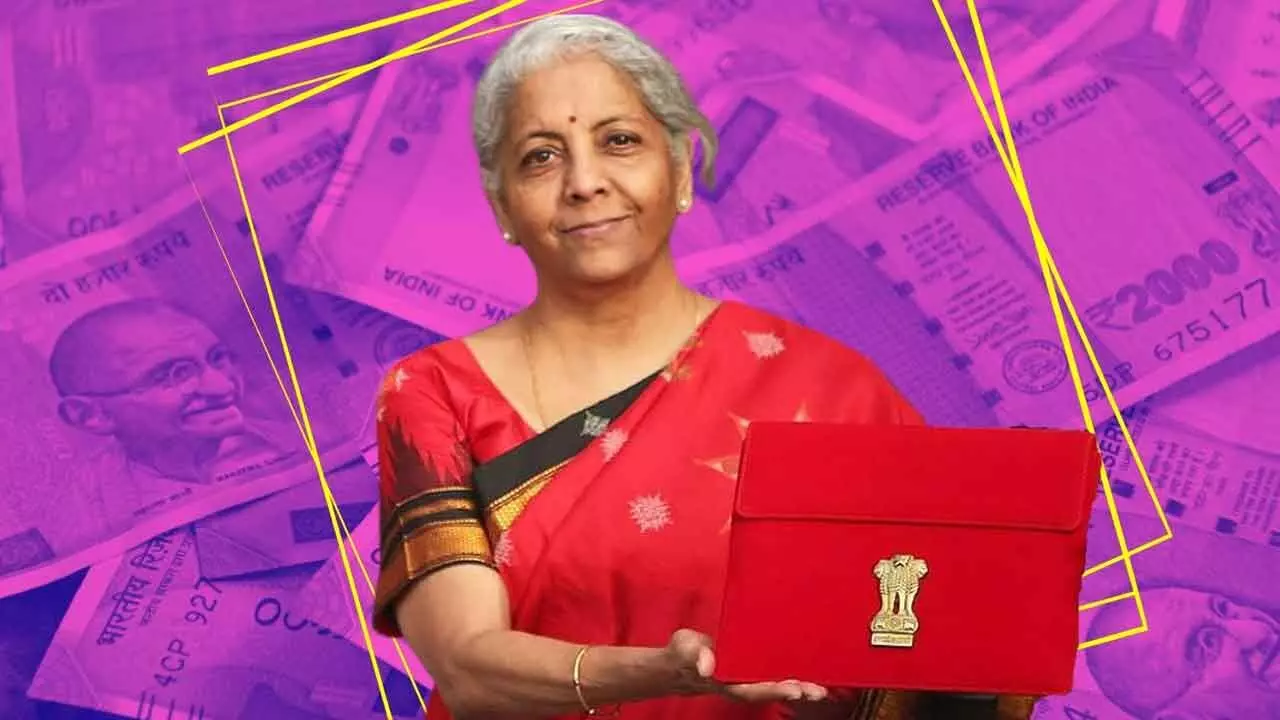

The Union Budget is a key policy instrument through which the Government raises resources and allocates them for the welfare of various sections of society. The Economic Survey 2025–26, presented ahead of the Budget, outlines the government’s major achievements across 16 chapters in a report spanning over 700 pages. One of its key takeaways is the substantial decline in extreme and multidimensional poverty, largely driven by government schemes that have expanded infrastructure and accelerated digitalisation.
Flagship programmes such as PM Awas Yojana for housing, PM Ujjwala Yojana for clean cooking fuel, and Ayushman Bharat for healthcare have significantly improved the living conditions of the common masses. Financial inclusion has also seen a major boost through PM Jan Dhan Yojana, with digital platforms strengthening access to banking and support systems.
Against this backdrop, the Union Budget 2026–27 was presented by Finance Minister Nirmala Sitharaman, addressing all critical areas that require policy attention. In her Budget speech, she noted that India’s economic trajectory has been characterised by stability, fiscal discipline, sustained growth, and, importantly, moderate inflation. The Budget is clearly growth-oriented, aiming to achieve long-term economic expansion while curbing market borrowings and reducing the fiscal deficit to 4.4 per cent of GDP in the current fiscal.
The Finance Minister outlined six key interventions to accelerate and sustain economic growth in pursuit of Viksit Bharat @ 2047. These include: Scaling up manufacturing in seven strategic and frontier sectors, rejuvenating legacy industrial sectors, creating “Champion MSMEs”, delivering a powerful push to infrastructure, ensuring long-term energy security and stability, developing City Economic Regions.
These interventions are crucial to sustaining the growth path chosen by the government, generating employment for the youth, and continuing large-scale infrastructure development. The creation of City Economic Regions, in particular, can act as powerful growth engines by strengthening industrial and services sectors and enhancing GDP growth.
The seven strategic and frontier sectors align closely with the vision of Atmanirbhar Bharat. These include Biopharma SHAKTI (Strategy for Healthcare Advancement through Knowledge, Technology and Innovation), India Semiconductor Mission (ISM) 1.0, the Electronics Components Manufacturing Scheme, dedicated Rare Earth Corridors to promote mining, processing, research and manufacturing, establishment of three Chemical Parks, and strengthening capital goods capability through high-tech tool rooms. The Budget also proposes schemes for enhancing construction and infrastructure equipment and container manufacturing.
For the labour-intensive textile sector, the Finance Minister announced the National Fibre Scheme, Textile Expansion and Employment Scheme, and a National Handloom and Handicraft Programme. In addition, Mega Textile Parks and the Mahatma Gandhi Gram Swaraj Initiative have been proposed to strengthen khadi, handloom and handicrafts, benefiting weavers, village industries, rural youth and the One District One Product initiative.
To support MSMEs, which are critical for employment generation, several initiatives have been announced. These include the creation of Champion MSMEs, support for micro-enterprises, an SME Growth Fund with an allocation of Rs10,000 crore, a Self-Reliant India Fund with Rs2,000 crore, and liquidity support amounting to Rs7 lakh crore. These measures are expected to significantly ease credit constraints faced by MSMEs.
On infrastructure, public capital expenditure has risen sharply from Rs2 lakh crore in FY 2014–15 to Rs11.2 lakh crore in FY 2025–26 (BE), and is now increased further to Rs12.2 lakh crore for FY 2026–27. The proposed Carbon Capture, Utilisation and Storage (CCUS) initiative, with an outlay of Rs20,000 crore, is particularly significant for end-use applications across key sectors such as power, steel, cement, refineries and chemicals.
The announcement of seven high-speed rail corridors as “growth connectors” is another major highlight. Hyderabad stands to benefit significantly, with connectivity proposed to Pune, Bengaluru and Chennai. Given the world-class infrastructure already available in the city, this is expected to boost economic growth in Telangana and potentially accelerate the state’s journey towards becoming a trillion-dollar economy.
In the financial sector, the government has proposed constituting a “High-Level Committee on Banking for Viksit Bharat” to review the banking system and align it with India’s growth trajectory while ensuring financial stability, inclusion and consumer protection. Once operational, the committee is expected to address persistent issues in access to credit across sectors such as agriculture and MSMEs.
Another important reform is the shift in the primary fiscal guidance metric from ‘Fiscal Deficit to GDP’ to ‘Debt to GDP ratio’. This provides greater flexibility for development spending while maintaining fiscal discipline. As development-led borrowing boosts GDP, the debt-to-GDP ratio can stabilise and decline over time, enabling sustained growth alongside fiscal consolidation.
The Budget also places strong emphasis on agriculture, women empowerment and rural livelihoods. Initiatives to promote women entrepreneurship include the Self-Help Entrepreneur (SHE) Mart, a community-owned retail outlet at the cluster level, supported through innovative financing. Given the strength of the SHG movement, this initiative could be transformative. I think this is going to be a real game changer given the congenial environment of SHG movement and we will be able to see women-led retail outlets everywhere. Finally, it will lead to gender equality and women empowerment in the economy.
To enhance farm incomes, the Budget proposes targeted measures for fisheries, including integrated development of 500 reservoirs and Amrit Sarovars, strengthening coastal fisheries value chains, and enabling market linkages through start-ups, women-led groups and Fish Farmer Producer Organisations.
In animal husbandry, the government aims to create employment in rural and peri-urban areas through credit-linked subsidies, modernisation of livestock enterprises, strengthening dairy and poultry value chains, and promoting livestock Farmer Producer Organisations. These initiatives are expected to boost the bovine economy and support agricultural growth.
The Budget also encourages diversification into high-value crops such as coconut, sandalwood, cocoa and cashew in coastal areas, agarwood in the North-East, and nuts like almonds, walnuts and pine nuts in hilly regions, supported by new schemes and programmes.
In essence, the Union Budget 2026–27 is an all-encompassing, growth-oriented Budget that provides a strong push to long-term economic expansion while enhancing incomes across diverse sections of society.
(The writer is former Senior Advisor, Research and Training, Dr MCR HRD Institute of Telangana, Hyderabad and at present Social Policy Consultant with UNICEF, East Asia and Pacific Regional Office, Bangkok)





